
Electrolysis
The Complete Guide to Permanent Hair Removal
Everything you need to understand electrolysis: the methods, the probes, skin types, the hair growth cycle and the conditions it helps. Explained by VTCT Level 4 qualified practitioners in Milton Keynes.
What Is Electrolysis?
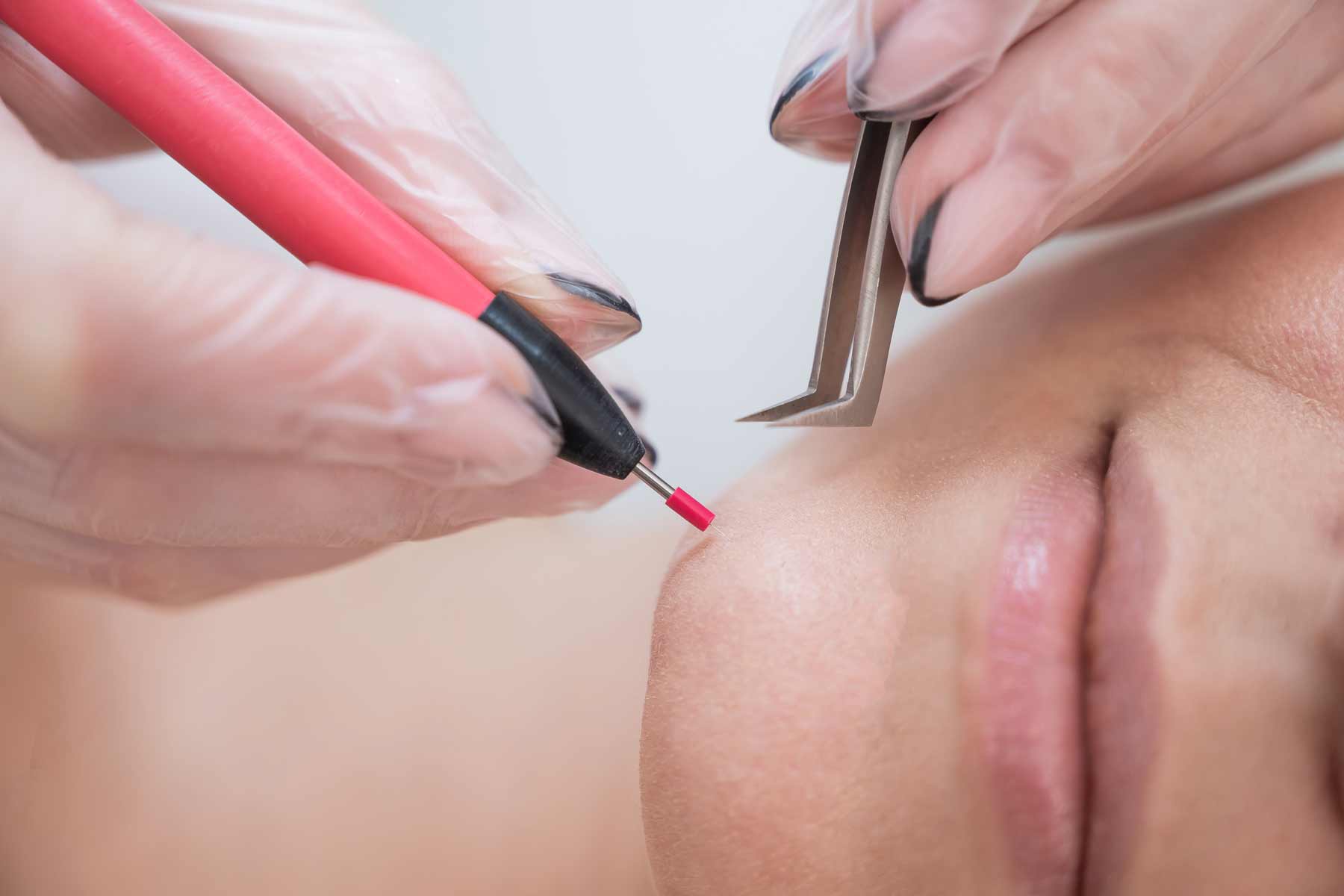
Electrolysis is a method of permanent hair removal that treats each hair follicle individually, using a fine sterile probe to apply a small amount of energy that destroys the cells responsible for producing hair.
It is the only hair-removal method recognised by the US FDA as truly permanent. Crucially, it does not rely on the colour of the hair, so it works on blonde, red, white, grey and fine hair as well as dark hair, and on every skin tone. That makes it the definitive solution when laser is not an option, and the perfect partner to laser for finishing.
FDA-recognised
The only method recognised as permanent.
Any hair colour
Works without relying on pigment.
All skin types
Safe across Fitzpatrick I–VI.
How Does Electrolysis Work?
A fine, flexible probe (not a sharp needle) is gently guided into the natural opening of the follicle, alongside the hair. A precise, low-level current is then applied to the base of the follicle, where the hair-producing cells sit. The treated hair is lifted away without being plucked.
Because the energy targets the cell structure rather than pigment, a follicle successfully treated in its active growth phase can no longer produce a hair. Repeating this across a course of sessions steadily reduces hair permanently.
The Three Methods of Electrolysis
There are three modalities. Your practitioner selects the most effective one for your hair, skin and treatment area, and may combine approaches across a course.
Galvanic
Chemical actionA direct current passes down the probe and reacts with the natural moisture and salt around the follicle, producing a small amount of a substance (lye) that breaks down the hair-producing cells. It is thorough and works well on deep or distorted follicles, and treats several follicles at a time.
Thermolysis
Heat actionAlso called short-wave or high-frequency, thermolysis uses an alternating current to generate heat that disables the follicle. It is fast and well suited to fine hair and larger numbers of hairs. Because it works through heat, it calls for extra care on richer, deeper skin tones, where heat-based treatment carries a higher risk of temporary pigmentation changes. For those skin types, galvanic or blend is usually the preferred choice.
Blend
Best of bothBlend combines galvanic and thermolysis in the same insertion, pairing the thoroughness of the chemical action with the speed of heat. It is versatile and often chosen for stubborn or coarse hair.
Needles & Probes Explained
The “needle” in electrolysis is actually a smooth, fine probe that slides into the follicle opening. It does not pierce the skin. Probes come in different diameters to match hair thickness, and in several designs. Every client is treated with a new, sterile, single-use probe that is disposed of after the appointment.
One-piece probes
A single continuous filament. A traditional, reliable design used across many treatment areas.
Two-piece probes
A filament joined to a separate shank, offering flexibility that can improve comfort and precise follicle entry.
Insulated probes
Coated along the shaft so energy is concentrated at the base of the follicle, helping protect the surface of the skin.
Gold probes
Gold-plated for clients with sensitivities, as gold is hypoallergenic and conducts energy smoothly.
Probe sizing & sterility: a probe close to the hair’s own diameter allows comfortable insertion and effective energy delivery. Sterile, single-use disposable probes protect against infection and are never reused between clients.
Skin Types & the Fitzpatrick Scale
The Fitzpatrick scale classifies skin from type I to VI by how it responds to sun. Electrolysis can be used across every Fitzpatrick type, because it targets the follicle directly rather than relying on a contrast between skin and hair colour. For deeper skin tones, the method and settings are chosen with extra care, as explained below the table.
| Type | Characteristics | Electrolysis |
|---|---|---|
| I | Very fair skin, often with light eyes; always burns, rarely tans. | Suitable |
| II | Fair skin; usually burns, tans minimally. | Suitable |
| III | Medium skin; sometimes burns, gradually tans. | Suitable |
| IV | Olive to light brown skin; rarely burns, tans easily. | Suitable |
| V | Brown skin; very rarely burns, tans darkly. | Suitable |
| VI | Deeply pigmented dark brown to black skin; never burns. | Suitable |
Choosing the right method for deeper skin tones
Richer, more melanated skin (typically Fitzpatrick IV to VI) has more reactive pigment cells, so heat-based treatment can carry a higher risk of temporary post-inflammatory hyperpigmentation, where the skin darkens as it heals. This does not rule out electrolysis; it means the approach is tailored. For deeper skin tones we favour the gentler chemical action of galvanic or blend over intensive thermolysis, work with conservative settings and insulated probes, and avoid over-treating any one area.
Pairing treatment with sun protection and careful aftercare further reduces the risk, and a patch test at your consultation lets us confirm the safest plan for your skin before we begin.
Understanding the Hair Growth Cycle
Hair grows in three phases, and electrolysis is most effective on follicles in their active growth phase. Because only some hairs are in that phase at any one time, a course of regular sessions is needed to treat each follicle as it becomes active.
Anagen (active growth)
The hair is actively growing and connected to its blood supply. This is the ideal moment to treat the follicle.
Catagen (transition)
The follicle begins to shrink and detach; treatment is less effective here.
Telogen (resting)
The follicle is dormant before shedding. Spacing sessions catches hairs as they re-enter anagen.
Conditions & Situations Electrolysis Helps
PCOS & hormonal hair
Persistent hair linked to PCOS, menopause and hormonal changes, treatable regardless of colour or thickness.
Blonde, red, white & grey hair
Hair that lacks the pigment laser needs, treated effectively because electrolysis targets the follicle itself.
Gender-affirming care
Sensitive, professional permanent hair removal for transgender clients, on any hair colour or skin tone.
Post-laser finishing
Removing the fine or light hairs that remain after a laser course for a truly hair-free result.
Fine & sensitive areas
Precise, single-follicle treatment for delicate facial and small stubborn areas.
Ingrown & distorted hairs
Individual attention to problem follicles that other methods can struggle to resolve.
Electrolysis vs Laser Hair Removal
Both are excellent treatments and often work best together. Understanding the differences helps us recommend the right approach for your goals.
| Feature | Laser | Electrolysis |
|---|---|---|
| Permanence | Long-term reduction | FDA-recognised permanent removal |
| Hair colours | Dark hair (needs melanin) | All colours: blonde, red, white, grey, dark |
| Skin types | All (with correct technology) | All Fitzpatrick skin types |
| How it targets hair | Light absorbed by pigment | Energy applied to each follicle |
| Coverage | Large areas efficiently | Individual follicle precision |
| Best for | Larger areas, dark hair | All hair types, fine hair, finishing |
Many clients combine both: laser for bulk reduction, then electrolysis for permanent finishing.
Learn About Laser TreatmentSensation, Effects & Aftercare
How it feels
Most clients describe a brief warmth or light pinch with each insertion. Comfort varies by area and modality, and settings are adjusted to keep treatment tolerable throughout.
Aftercare essentials
- Mild redness or warmth is normal and usually settles within hours to a day.
- Keep the area clean; avoid touching, picking or makeup on treated facial skin.
- Avoid heat, sun, swimming and intense exercise for 24–48 hours.
- Follow the personalised guidance given at your appointment.
Electrolysis, one topic at a time
Dive deeper into the areas that matter most to you, from the three methods and the probes we use to skin types, the hair growth cycle and what to expect from your treatment.
Methods
The science
Who it helps
Your treatment
Electrolysis FAQs
Discover Permanent Hair Removal
Book your consultation to discuss whether electrolysis, laser, or a combination approach is right for your unique needs.